How to manage money as a student ? (Step-by-Step Guide)
Learn how to manage your money and build good financial habits starting from today !
STEP-BY-STEP GUIDESHIGH SCHOOL/ COLLEGE STUDENT LIFEUNIVERSITY STUDENT LIFE
4/16/20265 min read

Introduction
Ever checked your bank account mid-month and felt your stomach drop? Yeah, I can relate. But here's the thing — the money habits you build right now as a student will follow you into adulthood, and they're harder to break than you think. That's why getting on top of your finances early is so important. It's not just about surviving university or college, it's about building the foundation for real financial freedom and stability. So, how do you actually manage your money? Keep reading and let's get into it.
Step 1: Plan your money and set a budget
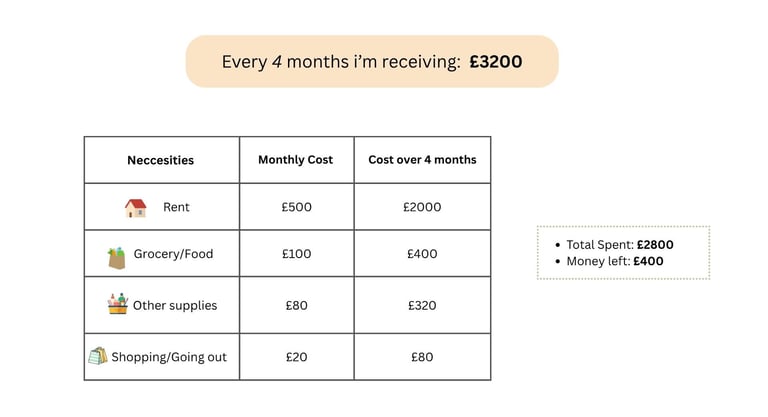
Always know what you are receiving, how often, and how much you will spend on each life necessity every month. Most students get student loans to pay for both their tuition and maintenance but even if you aren't getting student loans, this is still very important. Don't just receive money and squander it, then wonder at the end of the month "How did I even spend my money?". This is why you must have a budget in place for each category of things you need. If you don't know where to start, I'll show you an example below, along with a free template you can download so you can start planning how to spend your money.
Step 2: Monitor your spending
After you've planned what to spend, the next step is to monitor it. Let's assume you've planned to spend £100 every month, that's £25 every week. But at the end of the month, you realise you spent £120 instead. This is exactly why monitoring your spending is vital; it allows you to keep track of what you spend and when. I recommend checking in every week and noting what you spent it on. You can do that manually or use a budgeting app that shows you statistics of your spending.
Step 3: Always have an account for an emergency fund
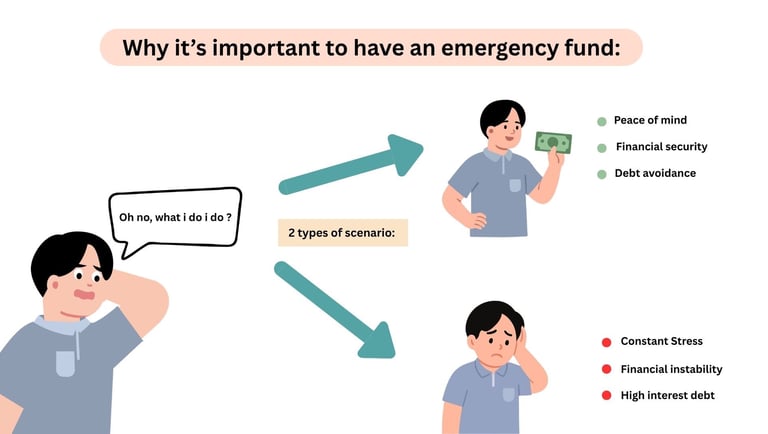
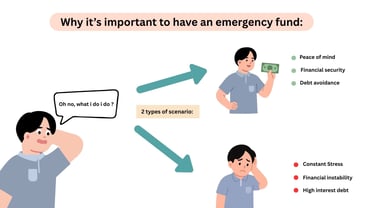
Please, please, please — this is so important. Anything can happen, and putting your trust in someone else to bail you out is not a good idea. Have an account for emergencies or last-minute urgencies. It could be anything, falling sick, or needing to get something important sorted urgently. Trust me, you will thank me later. Right now, go and open that account. It can be a savings account with low interest. Even if you only have £20 to put in there, do it. It will save from a lot of trouble later on.
Step 4: Have a separate savings account for important purchases
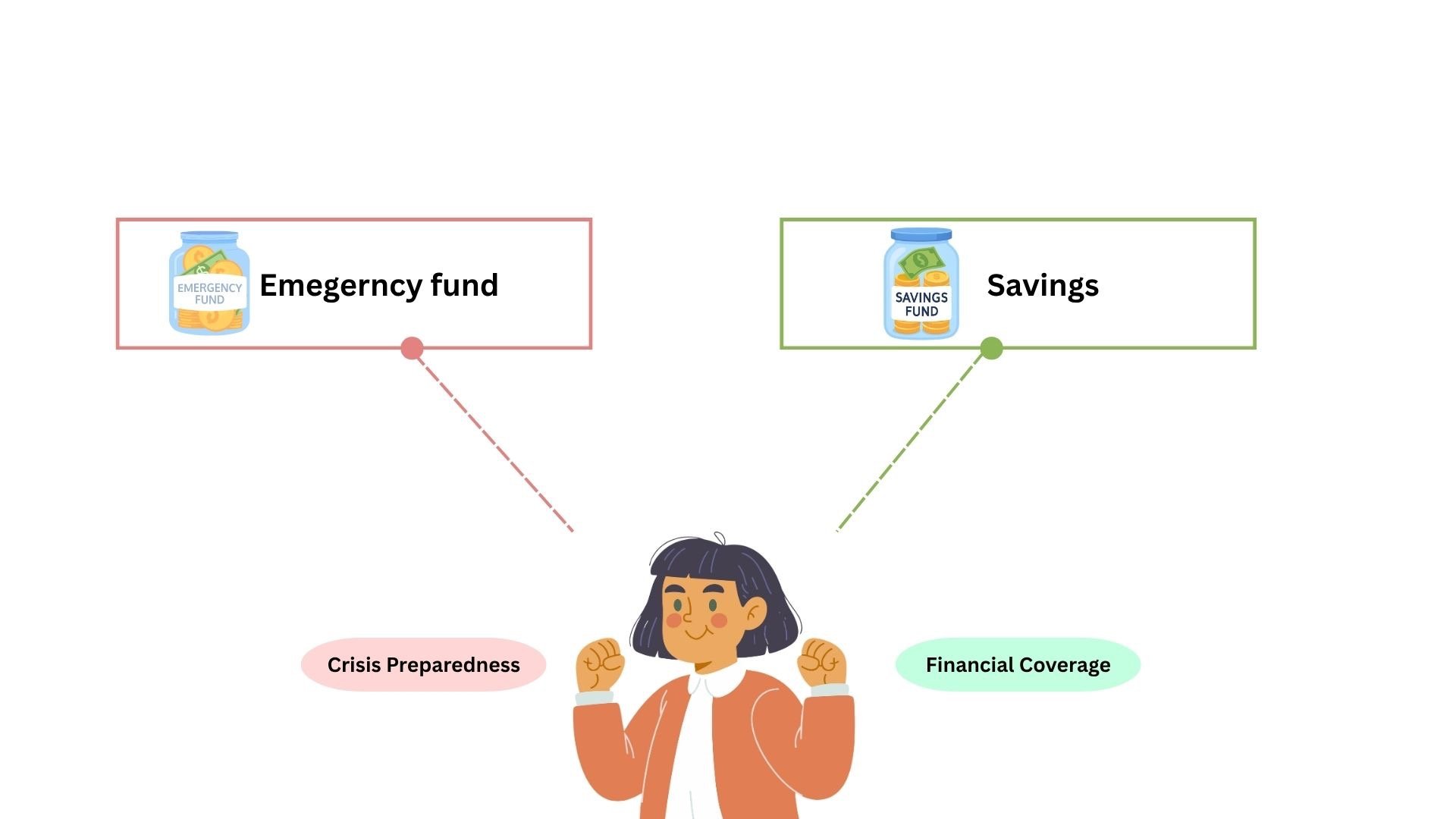
Now you may ask… what's the point of having a savings account when I already have an emergency fund? Great question. An emergency fund is there for when unexpected things happen, it needs to be readily available. A savings fund, on the other hand, is for when you want to purchase something important or something that will positively contribute to your life. For example, let's say I want to buy an online course to boost my employability skills. It's not an emergency, but I still need it. So rather than dipping into my emergency fund, my savings are there to cover it. That's why you need both.
Step 5: "Is this a want or a need?"
Before you buy anything, always ask yourself: "Is this a genuine need, or is it just a want?" If it's a want, leave it. If it's a genuine need, go for it. Do you want to buy those Nike Air Force 1 because you genuinely need them, or simply because you want them? Take a few minutes to think about it before you even walk into that store. There's nothing wrong with wanting things, but the reality is that a lot of the time those things are either unnecessary or won't benefit you in the long run. Spending money on things you don't need is a waste, and when money is wasted, lack becomes inevitable. It's like money starts running away from you. I'm sure you want money to be attracted to you, so don't chase it away! I know it can be hard for some of you, but if you think about money the way I just described it, you'll start catching yourself before making impulsive buys.


Step 6: Save more, spend less
Always look for ways to spend less so you can save more. Take advantage of student discounts and seasonal offers whenever you can, you'll be shocked at how much you save just by applying discount codes and keeping an eye out for offers. Before I purchase anything online, I always check Student Beans for a discount on the store I'm interested in and apply the coupon. It's a highly recommended app if you're a student. Feel free to explore other similar apps like UNiDAYS too, there are so many out there! there are so many out there!
Additional
Now, I'm not saying you should never treat yourself. I actually encourage you to treat yourself when you do well academically or work hard. Just make sure it doesn't happen so often that it eats into your finances. You've earned it, so enjoy it. Just keep it in balance.
Conclusion
So, what is the conclusion of this matter ? Managing your money as a student is all about being strategic and watchful. The same way you would plan your study time to pass your studies, you want to use that same concept to plan how you manage your money to achieve a good financial foundation. So what are the key points ?
Plan your money and set a budget
Monitor your spending
Always have an account for emergencies
Have a separate savings account for important purchases
Only buy something when it is a “need” rather than a “want”
Save more, spend less
Start small, stay consistent, and don't be too hard on yourself when you slip up because you will sometimes, and that's okay. What matters is that you keep going. Your future self will genuinely thank you for the habits you build today. Now go take charge of your money!