How to save money on food & groceries as a student in this economy ?
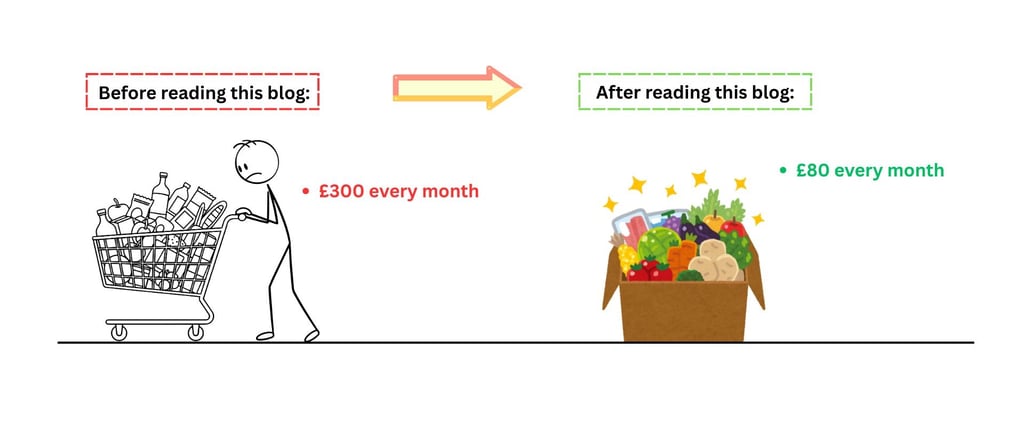
Starting your student life also means starting your cooking journey to independence. This blog covers everything from saving for groceries to building a skill such as cooking.
UNIVERSITY STUDENT LIFEHIGH SCHOOL/ COLLEGE STUDENT LIFE
2/27/20264 min read
Introduction
Spending money on ingredients to cook is much more efficient than spending it on fast food. And before anyone says anything, I know that fast food is nice and quick. Just order it and it arrives within a few minutes. But let’s face the reality, when we keep ordering, it builds up, and we end up spending a lot of money. So, whether you just aren’t familiar with cooking, don’t have much time to cook or if you simply just want to eat healthy. I got your back. I will reveal life codes to save money on ingredients with a cooking guide as an extra bonus.
1. Have a budget allocated for each week
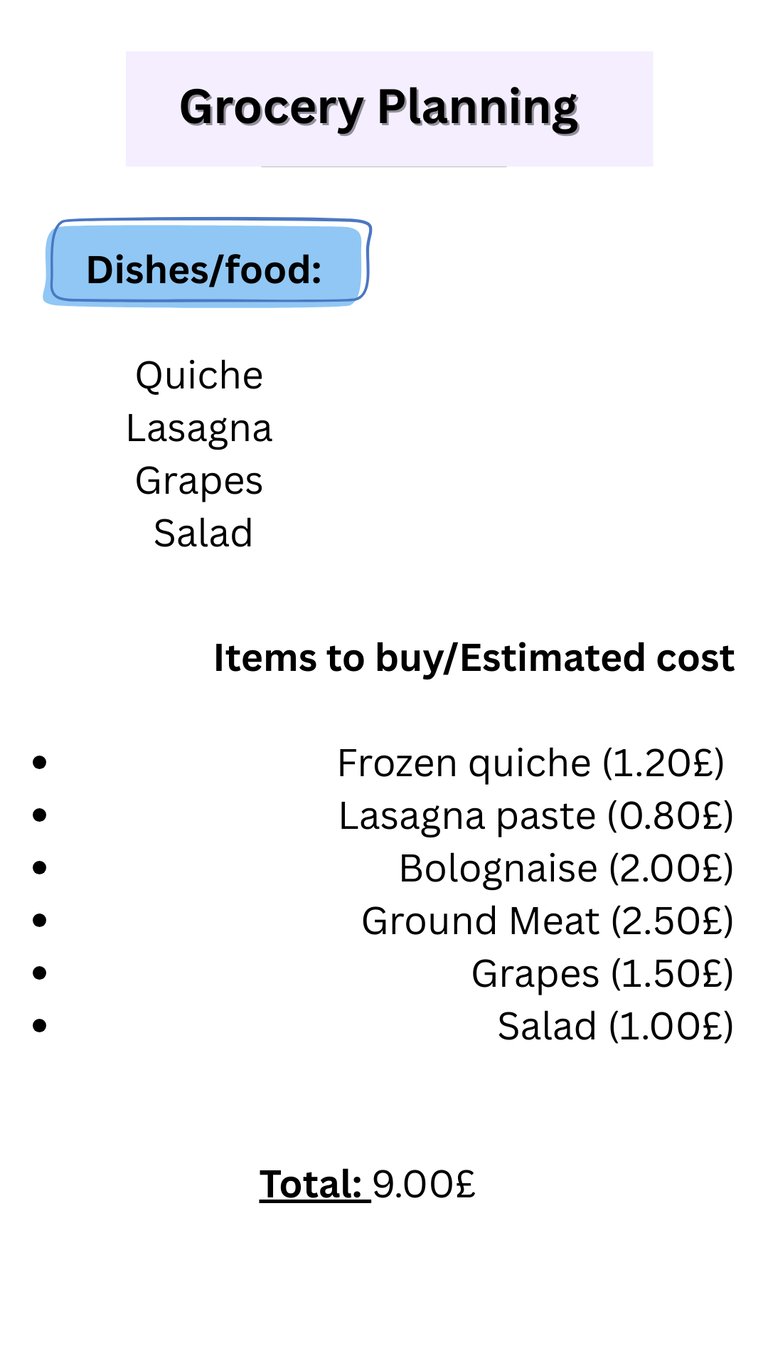
Before going to the supermarket or shops to buy ingredients, have a budget in place. This includes the maximum amount of money you are willing to spend and an estimated cost of the individual items you need. For example, you may be willing to spend £15 every week when you shop. You decide to spend money on a few items and estimate their cost and add them all up. If it’s above £15, you might consider cutting the items down (Example below). Doing this will not only save you money in the long run, but it will also prevent you from buying impulsively. Pick a day of the week to plan all of that. I would recommend every Sunday, before the start of every week.
2. Use apps like Student Beans or too good-to-go
You may or may not have heard of these apps before, but you will save so much money by just signing up and looking out for deals regularly.
Starting with Student Beans: As long as you are a student, and you know your student email, it's free and quick to sign up. Once you have signed up, you can search and browse through several online and in-stores that offer fair deals and even free stuff. Now, how does that link to groceries ? If you go to the food and drink section, you will find a lot of discounts on groceries and food. So, rather than spending 40£ on food on a random day, you will spend 20£ instead. I have used it before and it has saved me a lot of money.
Too good-to go: Too-good-to-go allows you to connect and purchase goods from local shops and restaurants for a low price. It’s a 1+1 benefit because not only do you get to save money, but they are also able to sell off the surplus food. I haven’t personally used it before, but based on people’s reviews, it’s good value for money if you’re looking into testing different types of food and having enough for almost a full week. Also, some are good, while others are not as much. Experience a bit until you find what works for you. But make sure you check the reviews of the store before purchasing.
3. Eat Healthy
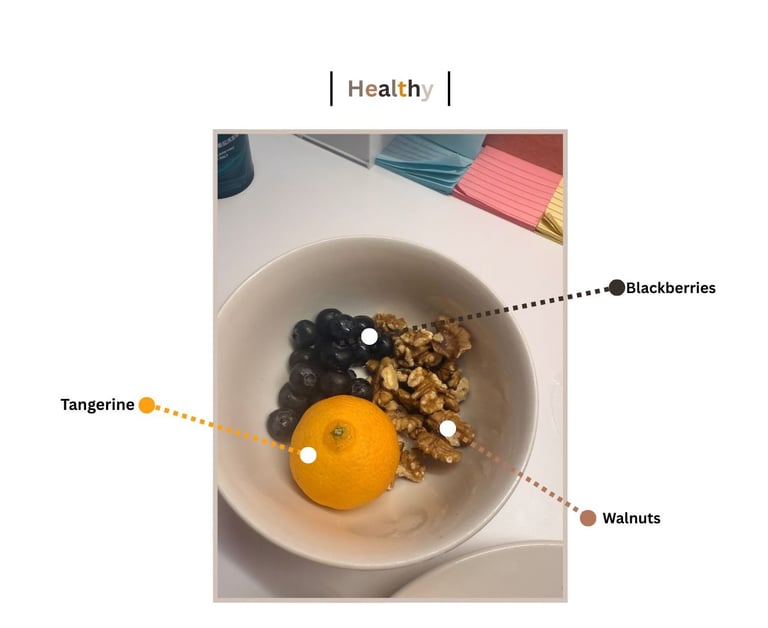
Studies demonstrate that eating healthy improves your cognitive function and mental health, leading to better academic performance. I personally advise that the very least—-is to eat one fruit and a few nuts per day. So, don’t just think of snacks and a nice meal only, include healthy food to complete the equation. It will give you energy and you will feel better. I know that we all want to save and survive BUT your health comes first. Don't neglect your body from the vitamins and nutrients it needs to work better. To save money on fruits, you can look out for discounts in-store, buy individual fruits as they are cheaper or consider frozen or canned fruits.
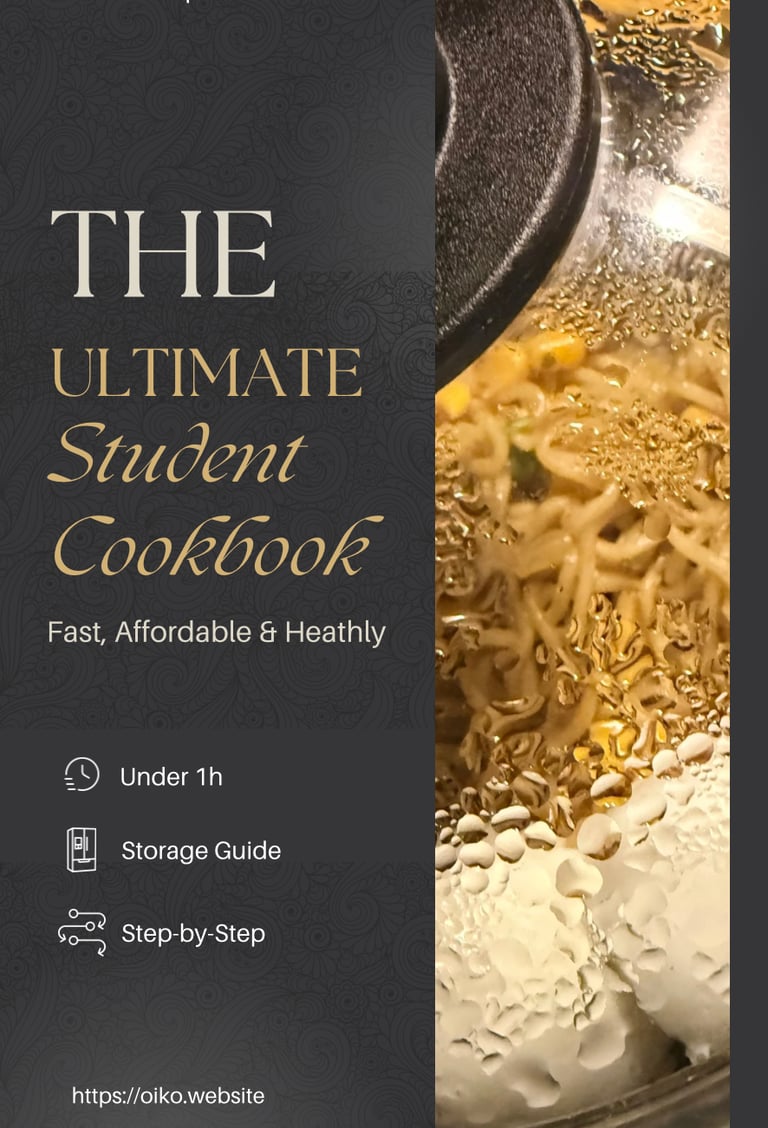
4. Get the "Ultimate Cookbook for Students” e-book for Cooking independently (Bonus)
Every so often, it is easier said than done. I made the "hard" part easy, with easy-to-follow instructions and a user-friendly approach within the e-book. You don't have to worry about where to start if you want to start cooking and taking charge. Even if you're living with your parents but would still like to participate, you're free to join. Being able to cook is not just for eating’s sake, it's to help you save more money on last-minute buys and an important skill to acquire. Now, imagine if there was an apocalypse. No one can go outside, and you need to stay at home. Hopefully, you have a few ingredients but no proper food to eat. What would you do ? Well, you won't have the choice but to use these ingredients to cook a meal to fuel your body with energy. Maybe this scenario is a bit too dramatic, but I'm sure you get the idea.
Extra Tips
Look out for deals and sales regularly. You can even base your meal prep according to what is on sales.
Buy in bulk on food items such as rice, pasta, beans or frozen vegetables. They are cheaper when they are bought in quantities. Just make sure you use them before they expire. Avoid buying bulk food items that expire quickly, like milk, fruits and bread. You can get these every week.
Avoid eating out too often. You can't expect to save money when you eat out almost every week, and it can easily add up. Reserve it for special occasions.

>Student Beans-Shopping Section
Conclusion
You can save money on food and groceries by:
Having a budget allocated for each week
Using apps like Student Beans or too-good-to-go
Getting the Ultimate Student Cookbook for meal prep
Keeping a close eye on deals and sales
Buying in bulk
Avoiding eating out too often