How to Stay Motivated All Through the Semester as a Student ?
99.99% of students are motivated at the start of the academic year but only 20% keep that motivation until the end. This is their secret...
COURSEWORK AND EXAM STRATEGIES/TIPSHIGH SCHOOL/ COLLEGE STUDENT LIFEUNIVERSITY STUDENT LIFE
3/15/20265 min read
Introduction
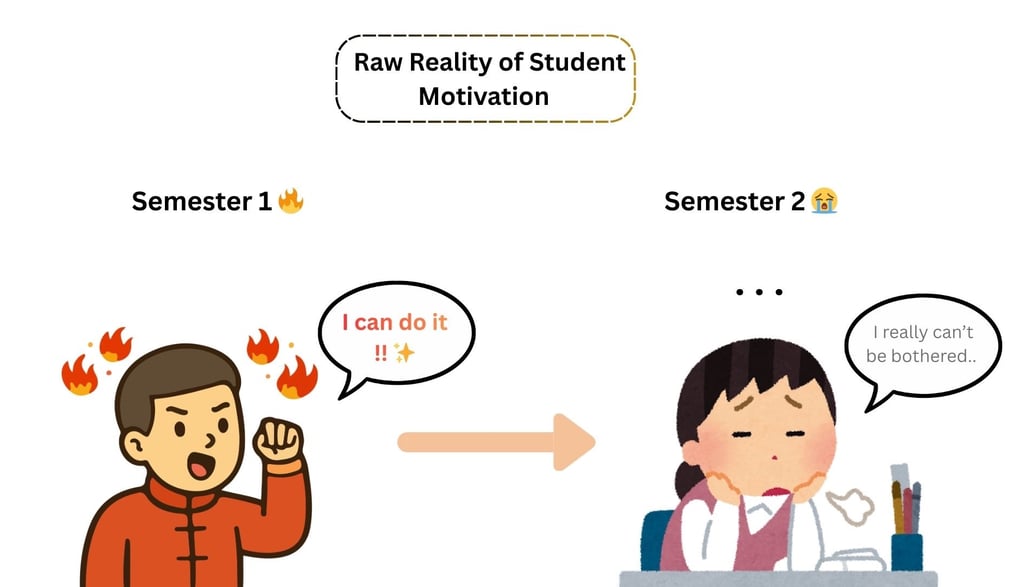
At the start of the semester, it’s easy to feel like you’ve got it. New goals, new content to learn and the determination to get the best grades ever. But after a few weeks ? The motivation starts to dissipate like a foam of hush, the assignments increase like never before and don’t even get me started with the exams. All of a sudden, you start doubting your academic goal. I’ve been there (probably more times than I’d like to admit). But here’s the thing: staying motivated isn’t about being perfect. It’s about finding little tricks that help you keep moving forward—even on tough days. Here’s how you can stay on track all semester long, without losing your mind.
Start with clear and realistic goals
At the start of each semester, I'd always make the mistake of setting these big, lofty goals like “get 100% on all my modules” or “never miss a lecture” (we’ve all been there). But those types of goals are pretty overwhelming. And when you don’t fulfil these goals, it’s easy to feel defeated.
Instead, set smaller, more specific goals. They’re easier to manage, and you’ll feel a lot more accomplished when you hit them. Try things like:
“Finish this essay a day early”
“Study for an hour every day”
“Improve my grade in this one class by 5%”
These are goals you can actually track and achieve. Plus, when you have goals, it motivates you to keep going even when you don't fee like it.
Break big tasks into smaller pieces
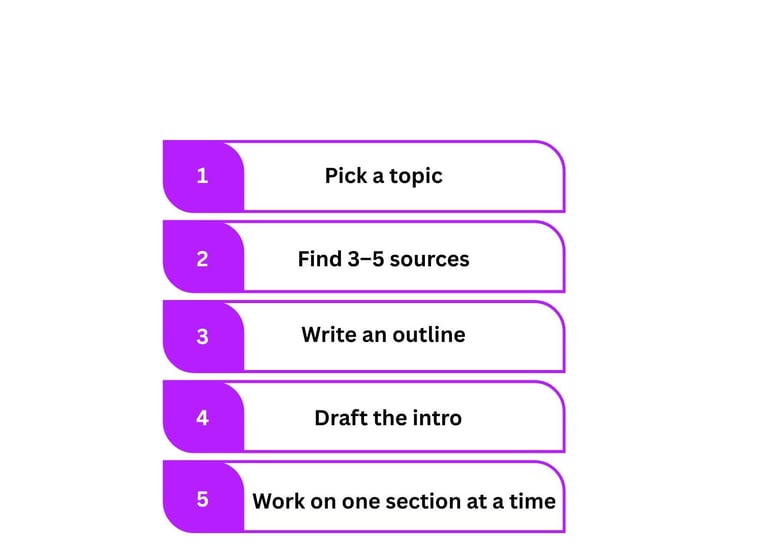
I’ll be honest—I’ve looked at a huge coursework or exam prep and thought, “How in the world am I supposed to deal with this…don't they have pity on us ?” It’s easy to get paralysed when a task feels too big. But here’s the secret: you don’t have to do it all at once. Break it down into small chunks. Let’s say you’ve got a research paper, for example:
Create a study routine that works for you
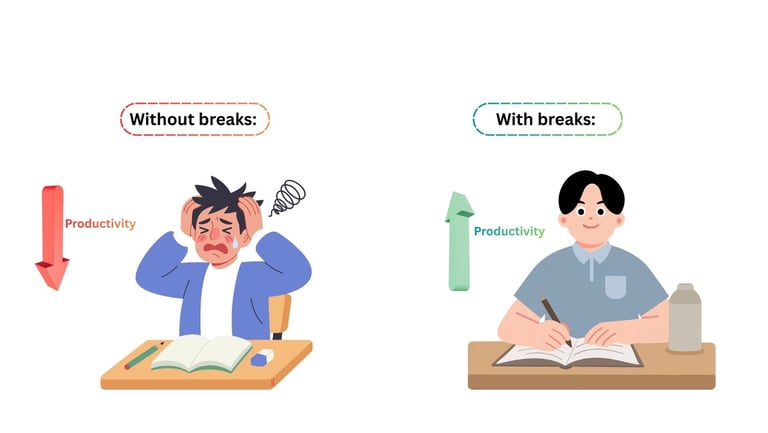
I used to think that I had to study in the library every single day for hours to be “productive”, with barely any breaks. Spoiler alert: that’s literally not true. I’d end up exhausted, unmotivated, and wishing I just went home.
The solution is finding a routine that works for you. If you’re not a morning person, don’t force yourself to wake up at 7 a.m. to study. Work with your energy levels. If you’re more productive after school or late at night, that’s fine.
Try to study at the same time each day, set small time blocks (say, 45 minutes of studying, then a 10-minute break), and make your study space work for you. Whether that’s a quiet corner of your room, a local café, or even on the couch with your favourite playlist—just make it a habit. (Consistency is more powerful than information overload for a day)
Find what study methods actually helps you
We all know the feeling of trying to cram the night before an exam and realising you still don’t understand half the material. It sucks, right?
I once asked a lecturer I am acquainted with, why I was putting in so many hours of work studying but still not getting the grades I wanted. She said that I should discover what works best for me and use it to work more smartly and wisely. This is why you see students who "barely' study and pass. It's because they know what works for them (It's not always the case). You don’t have to study the same way everyone else does. Some people swear by flashcards. Others thrive in study groups. Some of us are all about rewriting notes or doing practice exams. Experiment to find what works for you. Do you need a whiteboard to map things out ? Flashcards to memorise ? Or maybe solving problems over and over helps it click. Once you find your groove, studying won’t feel like such a chore. It actually starts to be enjoyable.
Don’t forget to take breaks
Let me tell you—overloading yourself is not the key to success. You might think you need to study non-stop to “get ahead,” but honestly, all you’re doing is setting yourself up for burnout.
Use the Pomodoro Technique, if you want to get technical: 25–30 minutes of studying, followed by a 5-10 minute break. It’s surprising how much more focused you can be when you’re not just staring at a textbook for hours. And don’t just sit there during your breaks! Get up, stretch, walk around, grab a snack. Your brain needs time to recharge. Trust me, taking those breaks will help you get more done in less time.
Lean on your Support System
We all need a little help sometimes, and there’s no shame in that. If you’re feeling unmotivated or stressed, talk it out with a friend, classmate, or even a teacher. You’d be surprised how much a quick study session or just venting about how hard the semester is can help you feel more energised.
Find study buddies who are also driven. It’s easier to stay motivated when you have people around you who are also working toward their goals.
Celebrate the Small Wins
Let’s be for real: sometimes it feels like you’re working non-stop and the only thing that matters is the end result. But progress is progress—even if it’s small.
Did you get your homework in on time? Celebrate. Got through a tough lecture without zoning out ? High five yourself mate.
When you take time to acknowledge the little wins, it keeps you motivated for the bigger challenges ahead. Maybe treat yourself to a chill night off, a good meal, or a mini celebration.
Final Thoughts
Look, staying motivated all semester is hard. I’ve had my ups and downs—days when I felt like I was crushing it, and others where I barely managed to get out of bed. But here’s the truth: motivation is a marathon, not a sprint. It’s okay to have rough days. It’s okay to not be perfect.
The key is building habits that work for you, celebrating your progress, and being kind to yourself when things don’t go as planned. Keep showing up, even when it’s tough. You’ve got this. Don't give up and you will reap the fruit of your labour.


Taking it step by step makes it feel less intimidating. Plus, every time you finish a section, you feel like you’re making actual progress and achieving something.