Step-by-Step Guide: How to balance between exams and courseworks
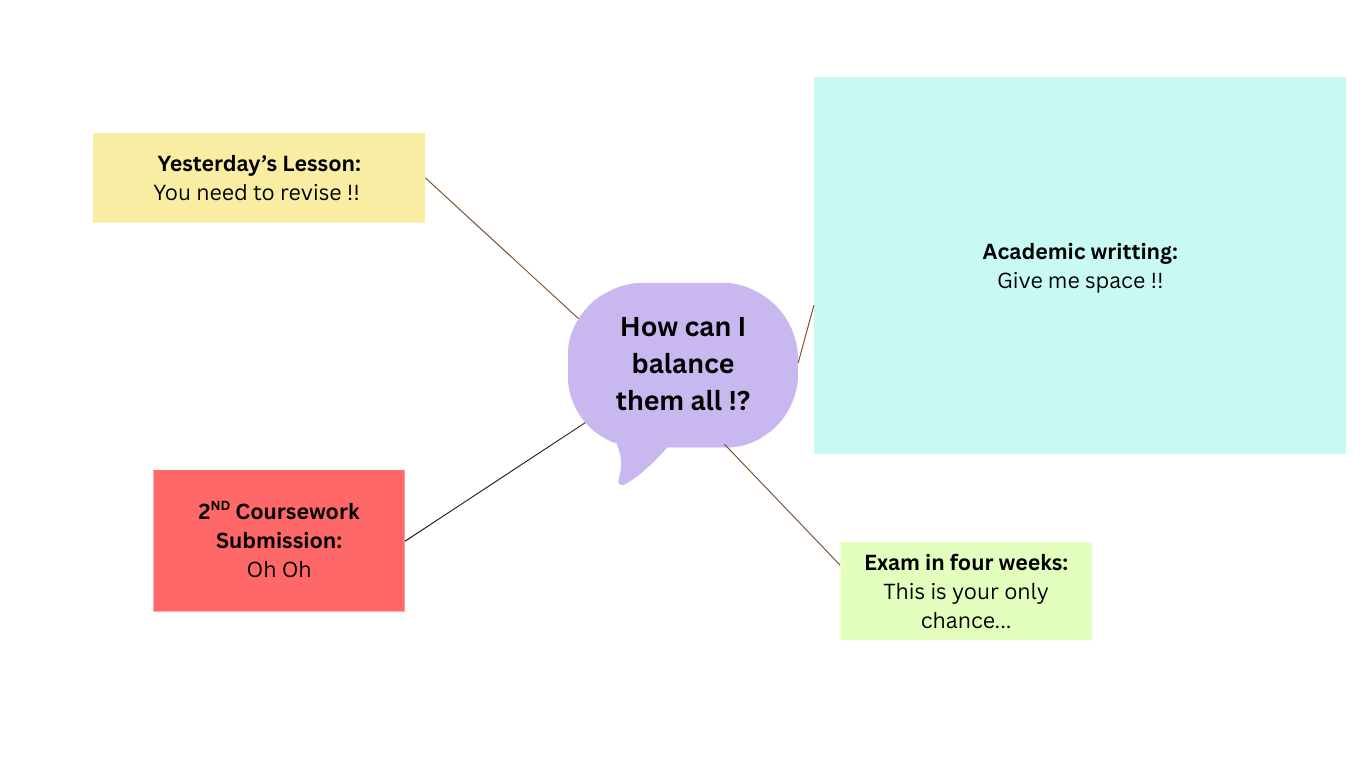
It can be extremely daunting and overwhelming to deal with courseworks and exams at the same time. This is why we are here to guide you with proven strategies that can work for you.
STEP-BY-STEP GUIDES
2/9/20265 min read
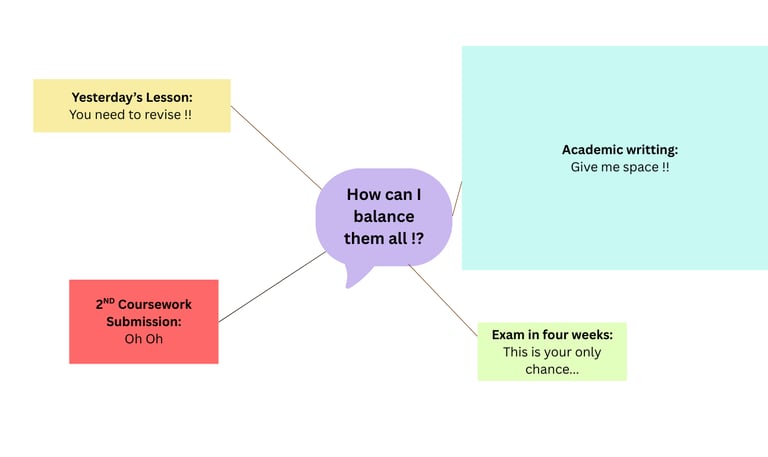
Introduction
The steps (+ examples)
Studying for an exam is already a commitment of its own that requires daily active recalling. And adding courseworks to the equation is not helping matters. Not dealing with these two things effectively can easily build-up. It can lead anyone to feel overwhelmed and unrealistically trying to multi-task both last minute. This is why this guide has been specifically crafted for you. So, what are you waiting for ? Get your noting material and let's dive in straight away. (Please note that you must follow through it for it to be effective. Don't just read, apply it)
Step 1: Get a yearly paper calendar or academic planner
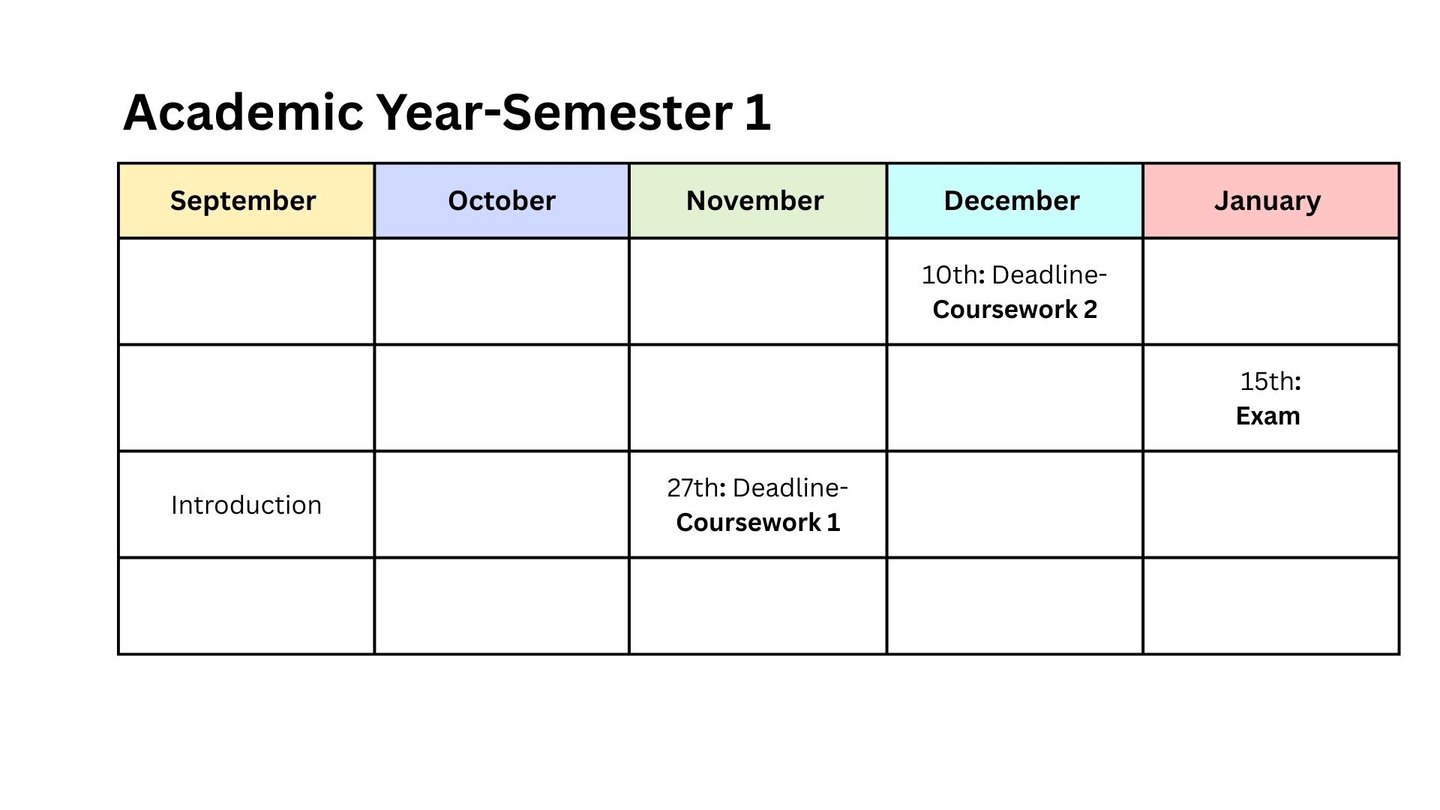
Write down all your deadlines (incl. exams and courseworks) for the year. Start with Semester 1, as Semester 2 is still far off. Once you've noted them down, stick it unto the wall so that you can see it everyday. It will give you the sense of urgency to start early.
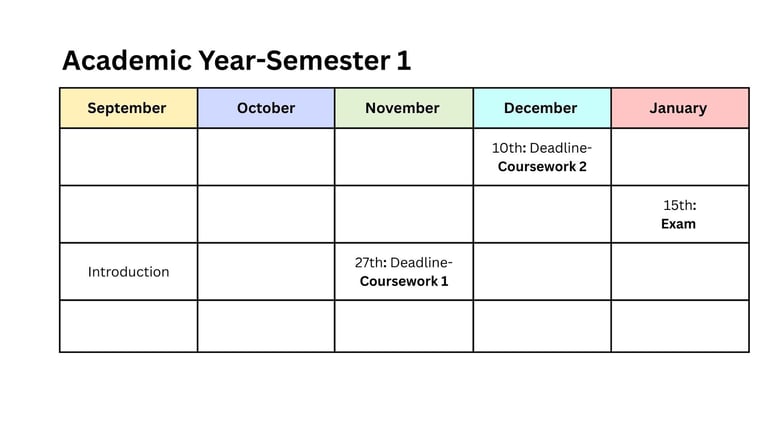
Example: You have 1 exam on the 15/01/2026 and 2 pieces of coursework. One on the 27/11/2025 and another on the 10/12/2025. You write them down on the calendar and stick it to the wall.
Step 2: Prioritise early deadlines first
Before diving into the exam section, let's talk about courseworks. Always prioritise early deadlines first. Don't juggle around courseworks and try to do a bit of everything and call it "productivity". This is not strategic and will not get you where you want. Spend more time on courseworks with tighter deadlines and less time on courseworks that are far off. Make sure you don't neglect the other courseworks but your priorities should be clear on what is more important. This is called "priority management". Doing this, will help you to stay on track and you won't have to rush the coursework when it's almost time to submit it because you would have already spent enough time on it. The planner will help you to keep track of that.
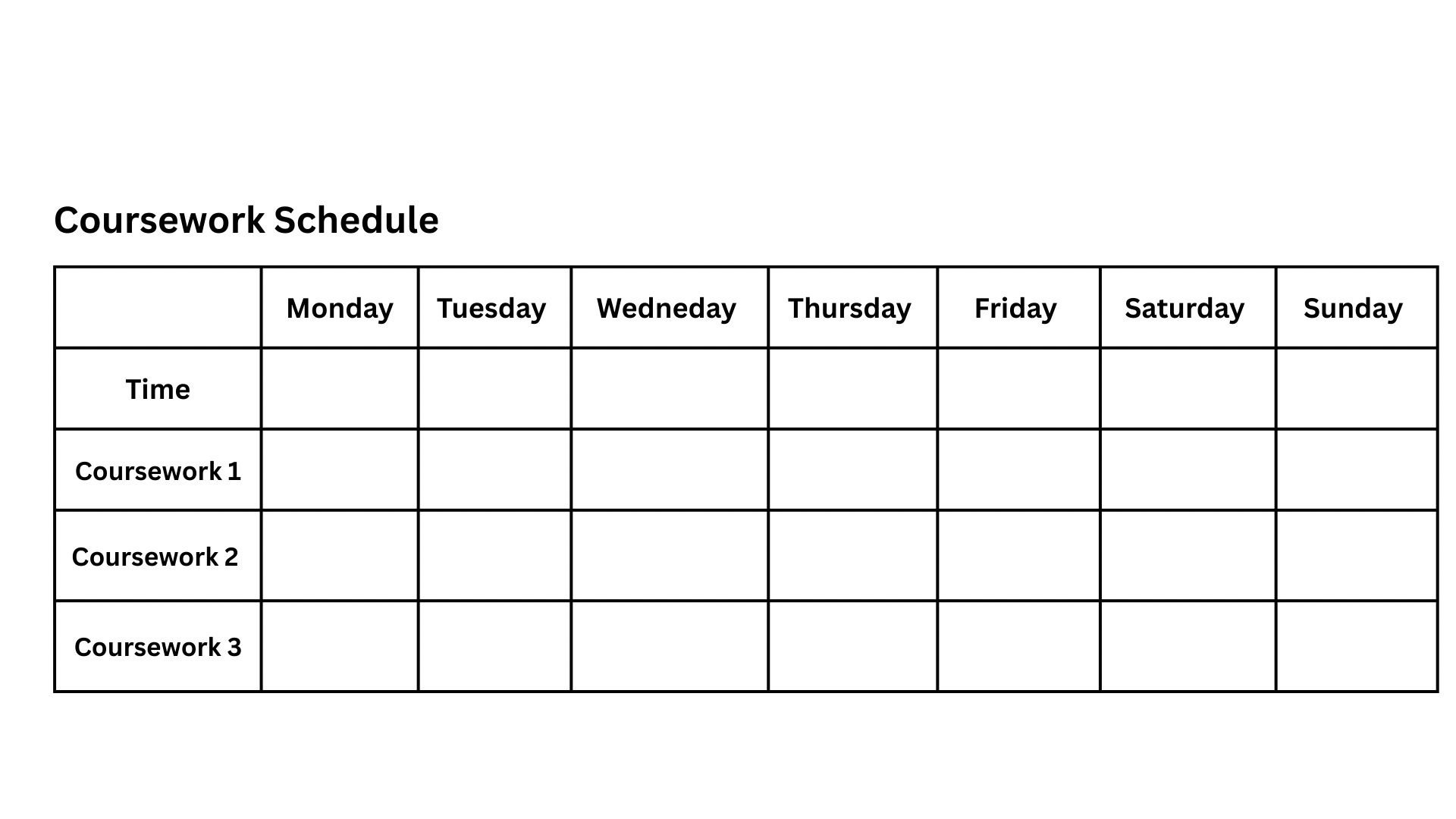
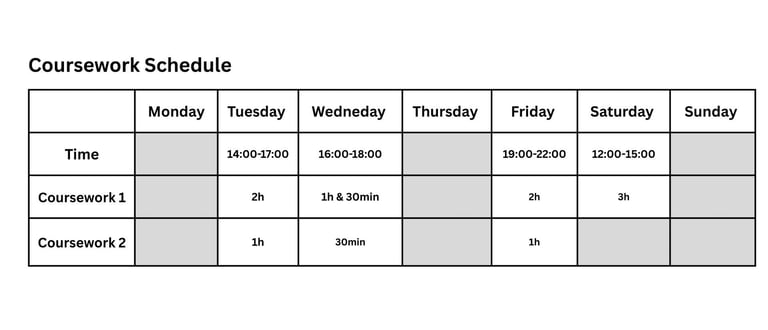
Example: You decide to work on your courseworks every Tuesdays, Wednesdays, Fridays & Saturdays. Coursework 1 is due on the 27/11/2025, it will be prioritise more than Coursework 2 that has the deadline on the 10/12/2025. You will spend 2h on Coursework 1 and 1h on Coursework 2, depending on how long you've allocated and that you have available on these very days. Customise it based on your preferences.
Step 3: Pick an exam strategy and start revising as soon as possible
For University Students/if you have access to the content online:
Upload your materials and course content into a learning platform such as Quizlet or Knowt. Quizlet is a platform that I have personally used for years and I have recently been using Knowt. They will generate you study guides that will filter unimportant information and focus on the essentials. So you don't have to learn about every single words on the material.
Spend a min of 30min reading the study guide and a min of 30min on testing your knowledge on tests using these platforms. Some lecturers do post practise test on your university platform, these can be really helpful. Try your best to do this right after the lecture as the information will still be fresh and ripe in your mind.
Repeat the process for at least one week everyday and make sure you UNDERSTAND the main concepts. As long as you understand and can explain it, you won't have any problems. If you need more or less than a week then feel free to adjust that.
After a week, revise the content less frequently (e.g once a week or in 2 weeks).
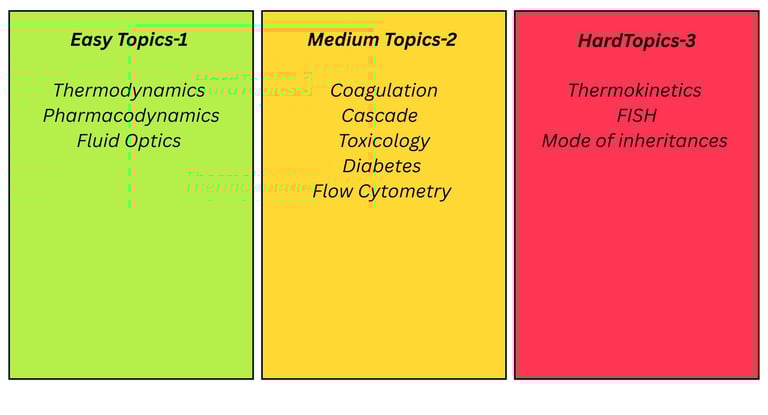
Get lined paper with 3 types of different colours and rank all topics you revise from 1-3. 1 being easy, 2 being medium and 3 is hard. Revise easy topics once in two weeks and hard topics more frequently. Make sure to write down the week number in which you got the lecture. So, that you can locate them in your university platform. (You don't have to get 3 different colours of lined paper, you can make a table. It's just more creative)
5-3 weeks before your exam, start the menu with the hard topics first as it allows you time to revise them afterwards. Then, revise the easy topics.
For College and High School Students:
Open a word document or do it in a blank piece of paper. And make a table for all your subjects/modules. Write down all topics that will come up for each subjects/modules. This will allow you to keep track of all the topics without them being disorganised and all over the place.
Pick a study technique that will work for you. It can be active recall, listening, explaining it to your peers etc..Make sure you understand and that you get the basics right.
Gather all the past papers or exam question style you can find. Separate your study schedule in two. One part where you actually learn the content. Another, where you practise. Don't forget you will be tested on how well you answer the questions.
Get paper with 3 types of different colours for each subjects and rank all topics you revise from 1-3. 1 being easy, 2 being medium and 3 is hard. Revise easy topics once in two weeks and hard topics more frequently.
10-3 weeks before your exam, start with the hard topics first and practise with exam papers. It allow you time to revise them afterwards. Then, revise easy topics.
Tips
Do not multi-task between topics when studying. Instead focus-task on one topic first, then move on to the next one. When you multi-task, you become less efficient.
Do not set yourself with unrealistic studying goals. If you cannot even keep up with 20 minutes of studying everyday, then how will you be able to study 3h every single day ? You need to be realistic. As mentioned earlier, spend a minimum of time to study first everyday. Once it has become a habit, you can consider increasing your study time.
Set your own personal deadline for courseworks. For example, 3 days before your actual submission, make sure that you are done. This will give you peace of mind.
To note
These are strategies that worked for me as a student. You may find other techniques that will work better for you. Experiment with different things and pick the one that works for you.
Conclusion
Write down all your deadlines on a paper calendar for priority management of your exam and coursework
Pick 3-5 days to work on your assignments and spend more time on earlier deadlines
Study for short amount of time consistently everyday and start early
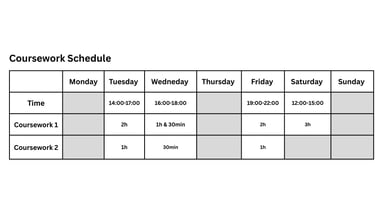
You can download a free template here