The Friends Who Pull You Down: A Student’s Guide to Choosing Better Circles
I know what it feels like to be alone, to have no one, and to be laughed at. It’s painful. And that’s exactly why I’m writing this blog—to help you avoid the same trap and recognise when a friendship is not good for you.
HIGH SCHOOL/ COLLEGE STUDENT LIFEUNIVERSITY STUDENT LIFESTEP-BY-STEP GUIDES
5/13/20266 min read
Introduction
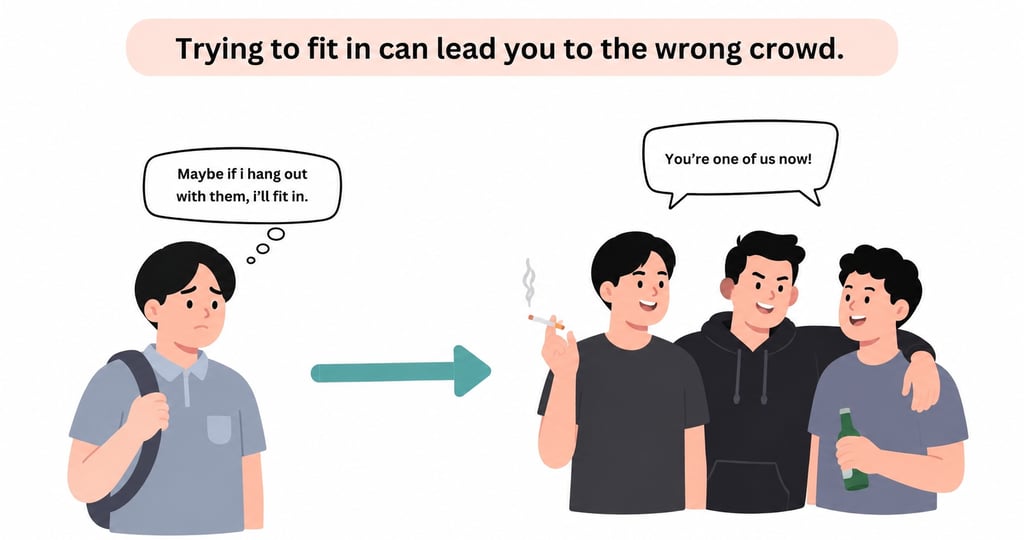
A new academic environment often means new friends. And new friends bring new personalities—both good and bad. Not everyone you call “your friend” truly wants to see you succeed. In some cases, they may pull you down unintentionally, leading you toward bad life choices that can be costly in the long run. I know this because I’ve been through it myself.
When I first entered high school, the friend who had been with me throughout primary school left me for a new group. Suddenly, I was alone. I got made fun of, felt left out, and started blaming that friend for everything. I envied the popular students, they always seemed confident and surrounded by people. So I did what many students do: I tried to fit in. I started hanging out with different people—even the wrong ones. And slowly, they began to influence me in a negative way. But I’m glad I eventually opened my eyes and cut them off.
I know what it feels like to be alone, to have no one, and to be laughed at. It’s painful. And that’s exactly why I’m writing this blog—to help you avoid the same trap and recognise when a friendship is not good for you.
- What is Friendship? -
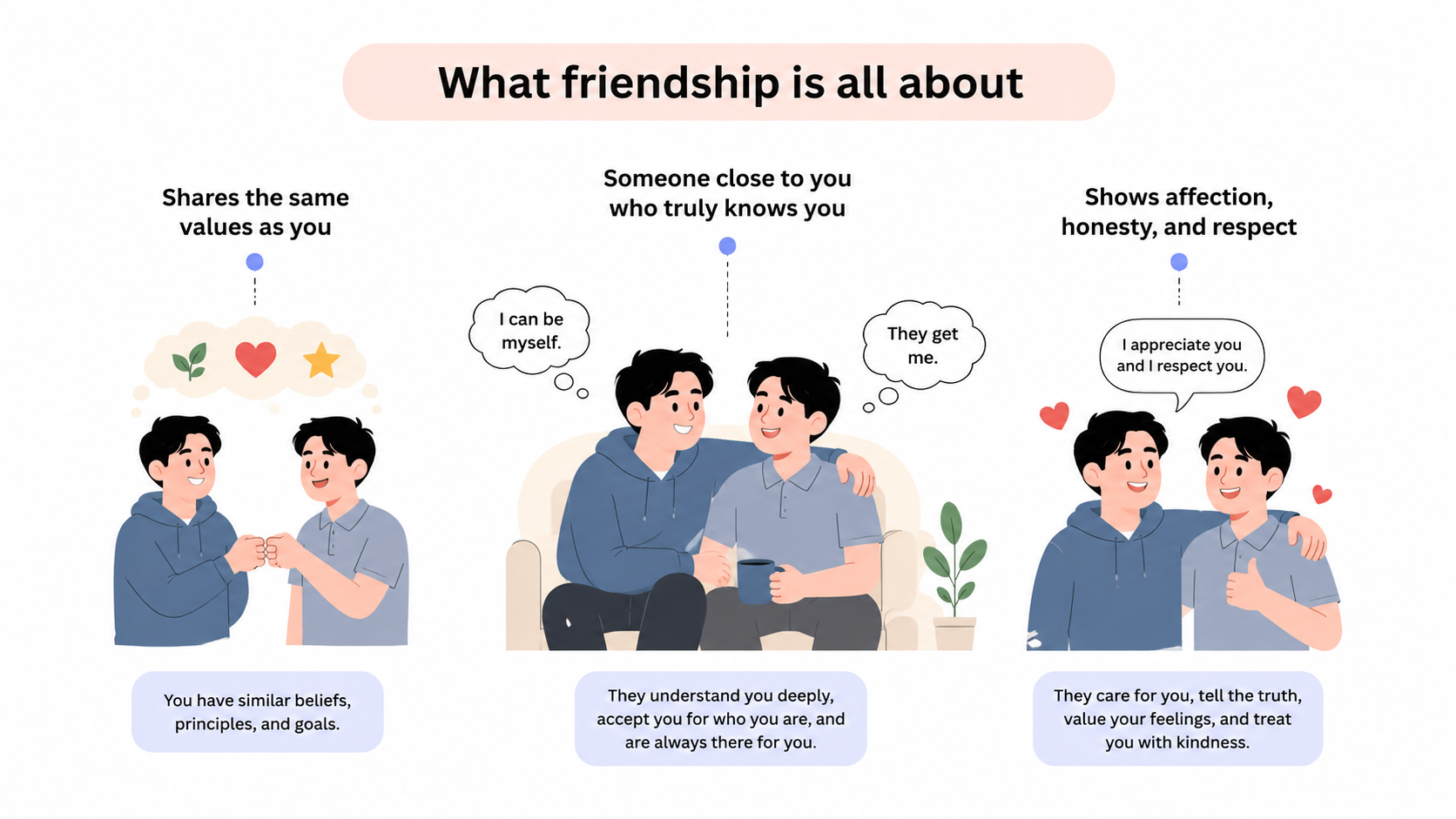
According to KotoEnglish.com, a true friend fits these qualities:
A person who shares the same values as you.
Someone close to you who truly knows you.
Someone who shows affection, honesty, and respect.
So, anyone who doesn’t meet these qualities cannot truly be called a friend. Friends are meant to bring good into your life, not harm.
-- How to recognise bad friends ? --
If you’re still unsure, here are some clear signs:
They don’t show genuine care and lack respect for you
They ignore your boundaries and pressure you into things you’re uncomfortable with
They bring negativity into your life and don’t add value
They are controlling or a bad influence
They constantly criticise you or feel jealous of you
If your “friend” fits these traits, it’s worth thinking twice. Usually, recognising bad friends isn’t the hardest part. The real challenge is letting go and you’ll see why in the next sections.
The consequences of a bad friendship:
Bad friendships can seriously damage your life. The consequences are real:
Stress, anxiety, and even depression
Poor academic performance
Low self-esteem and confidence issues
And that’s just the surface level.
There are deeper consequences too, including becoming like them. There’s a saying:
“Do not be deceived: bad company corrupts good character.”
This is very true.
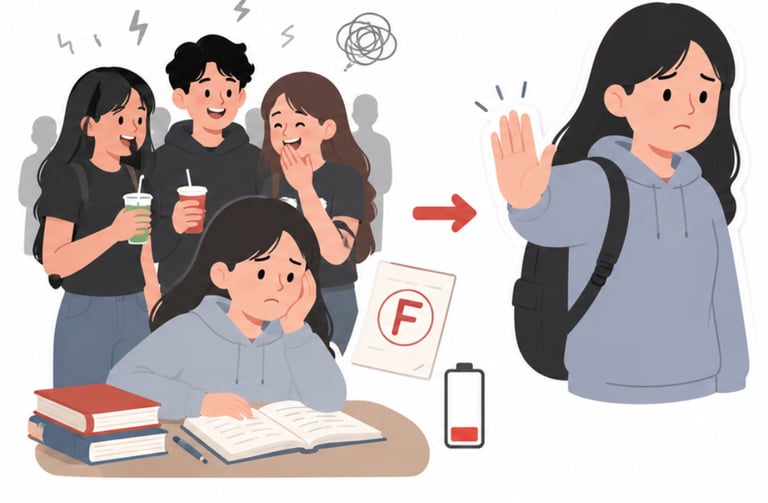
I remember being around people who constantly swore. Over time, I started swearing even more than they did. I kept telling myself I could change them but instead, they changed me. The truth is, bad habits usually influence good ones, not the other way around. Over time, those habits can follow you into adulthood and limit your potential. So it’s not just about “bad friends”—it’s also about friends who do bad things.
Show me your friends, and I’ll show you your future.
Why students are the most vulnerable ?
This is the hard truth: students are often the most vulnerable to bad friendships.
Why? The desire to fit in, the fear of being alone and social pressure. There are other reasons too, but these are the most common. Because of this, many students stay in unhealthy friendships even when they know it’s harming them. Sometimes, it’s emotional attachment or shared history that makes it difficult to let go. That’s completely understandable. If you’re reading this and this sounds like you, don’t feel alone. I’ve been there—feeling like if I let go, I’d have no one, and that people would laugh at me. But there is hope and there is always a way forward.
How to distance yourself without drama (step-by-step)
A simple thing to remember
You are not betraying anyone, you are protecting yourself.
The best way to distance yourself from people who call themselves your friends but are bad for you is to do it quietly:
Set small boundaries
Reduce your availability
Let the friendship fade naturally
A friendship weakens when no effort is being put into it anymore.
And please, this is from real experience, don’t let anyone convince you that staying in a bad friendship is “not that bad.” It is.
That’s why I wrote this blog, so you can understand the truth and break free from people who could damage your life.
Sometimes, just one wrong person—one wrong circle—can change everything. And that’s the reality.
Final Thought
Your circle shapes your future—choose wisely.
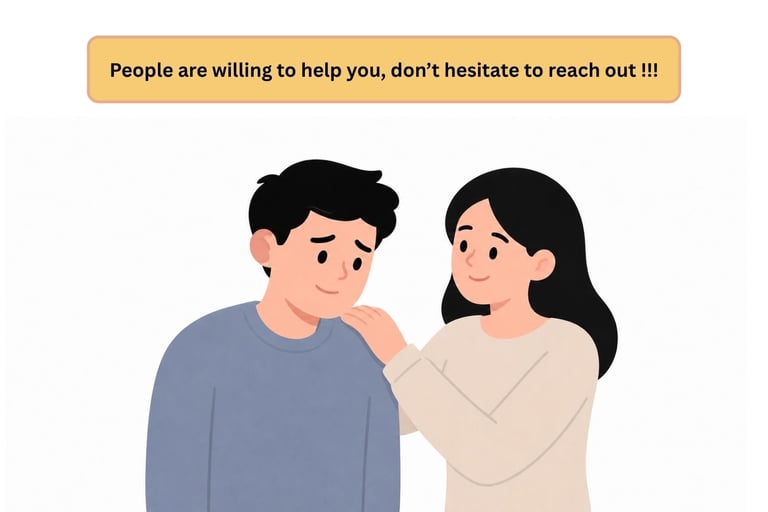
If you’re struggling or unsure, don’t hesitate to reach out. You can contact me through my social media or by email, I’m always open to listening and giving advice.
And remember, you can also speak to someone you trust, whether that’s a family member, a teacher, or someone in your school or community. You don’t have to go through this alone.
1. Accept the reality
First, accept the reality. Sometimes we convince ourselves that our friends aren’t “that bad,” but deep down we know the truth. Accept that staying in that friendship can harm your future.
2. Reduce your availability
Don’t make a big announcement. Instead, reduce your availability:
Reply more slowly
Say “I’m busy” (and actually focus on something productive)
Stop initiating conversations
Over time, the friendship will slowly fade because no effort is being put into it.
3. Change your routine
Sit somewhere different if you can
Spend time with more positive people
Start conversations with people you know are good influences
Join clubs or activities to meet new people
There are millions of people in the world, these “bad” friends are not your only option. This creates distance naturally without making it obvious. Just act normal, like you’re simply exploring new things.
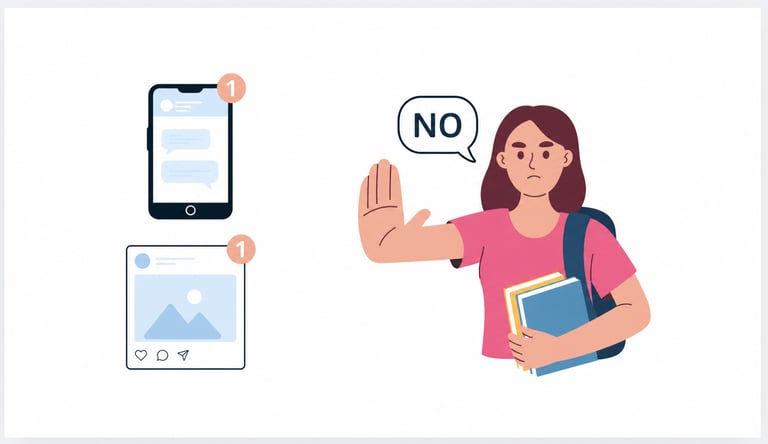
4. Be careful with social media
You don’t have to unfollow or block them immediately
Avoid reacting to everything they post
Share less about your personal life
This reduces the connection between you and them without causing unnecessary tension.
5. Set small boundaries
Avoid dramatic conversations like “We need to talk.” But, keep it simple:
“I can’t hang out today, I’ve got things to focus on.”
6. No gossiping or involving others
This is very important. Talking too much about the situation can create unnecessary drama. If someone ask, keep your answer simple:
“We’re just doing our own thing right now.”
7. Stay calm
Expect some reactions—but stay calm.
Some people may question you, act differently, or try to pull you back in. Stay calm and don’t engage. If you don’t react, the drama will fade quickly.
8. Build better connections
We all need people and it’s completely normal. So, focus your energy on those who:
Support you
Respect your boundaries
Help you grow
If you can’t find them in your school, look outside. Join activities, communities, or groups where people genuinely care.
9. Speak up
Lastly, know when to speak up. Sometimes, unhealthy friendships can turn into bullying, pressure, or manipulation. And one of the biggest mistakes people make is staying silent and trying to handle everything alone.
Please don’t do that to yourself.
Talk to someone you trust. It could be your parents, a teacher or school counsellor, a close friend or relative. Or simply someone who genuinely wants to help. Opening up can feel awkward or scary at first, I understand that. But the right people will listen and help you take the next step. And yes, there are situations where parents may not fully understand or support you. If that happens, don’t give up. Reach out to your school, institution, or another trusted adult instead.
You do not have to suffer quietly and you are not alone in this. Getting help is not weakness—it’s protecting yourself and your future.