Step-by-step Guide: How to deal with Academic Pressure and Anxiety
How do you deal with academic pressure and anxiety ? This guide includes: - Simple examples - Free dowloadable templates - Valuable Content
STEP-BY-STEP GUIDES
2/20/20265 min read
Introduction
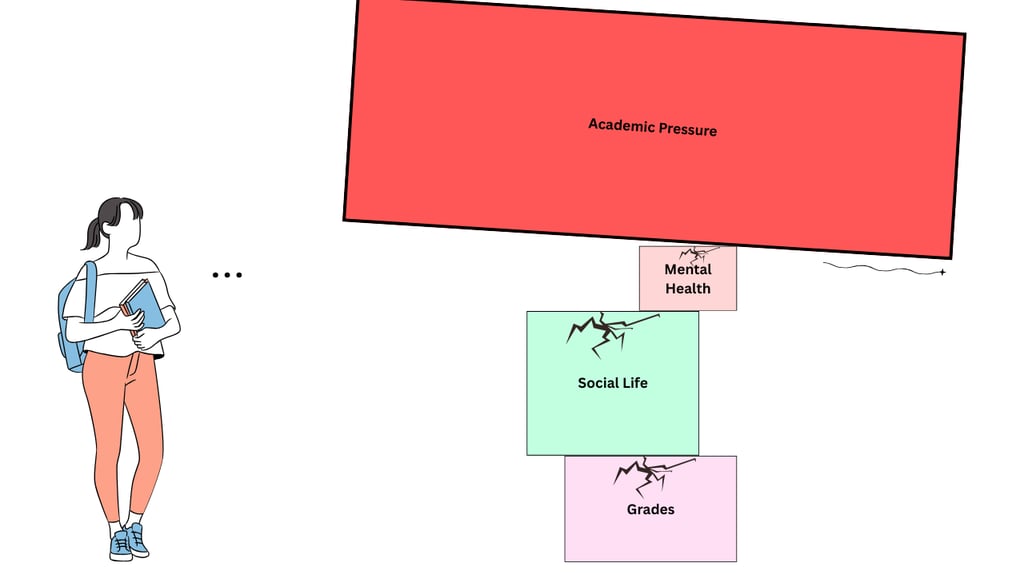
Academic pressure is one of the vicious cycles in which a lot of students fall victim to, including myself. I have personally experienced it, and it is the root of all kinds of negative academic performance factors. This is why this guide is here, to help you and me, escape from the grip of academic pressure and anxiety.
What is Academic Pressure and Anxiety ?
Academic pressure can be defined as when students experience intense pressure and anxiety in an academic context for various reasons such as:
The fear of failure: The fear of disappointing oneself is real and this can lead to anxiety, which can impact our academics during important exams or coursework.
Comparison and the Educational System: The educational system has been built in a way that our worth is tied down to our grades. This leads to a mindset of unhealthy competition and comparison with others. Whether you believe it or not, this leads to stress. It becomes toxic mostly when we start comparing our results. An example is that if a student observes that his or her classmates outperform them, it can lead to self-worth issues and anxiousness. This could negatively impact their performance next time. Competition steams from high grades, thinking that if we don’t have the best grade, then we are worth less.
Expectations from parents and a fear of disappointment: Very high expectations from parents can lead to pressure. Whenever these expectations aren’t met and the parents are disappointed. In serious cases, it can lead to depression. Most of the time, this is where the anxiety and stress comes from.
Perfection: Perfection can become the syndrome of one's main focus. If it's not “perfect” or not “good enough”, it can lead to self-hate, deprivation and low self-esteem.
There are additional reasons, but these are the most common
What are the symptoms of Academic pressure and anxiety ?
Changes in eating habits
Fatigue
Tired most of the time
Overwhelmingness
Mood swings
Isolation and Loneliness
Procrastination
Lower grades over time
How to deal with Academic pressure and anxiety ? (Step-by-Step)
Step 1 — Set realistic goals
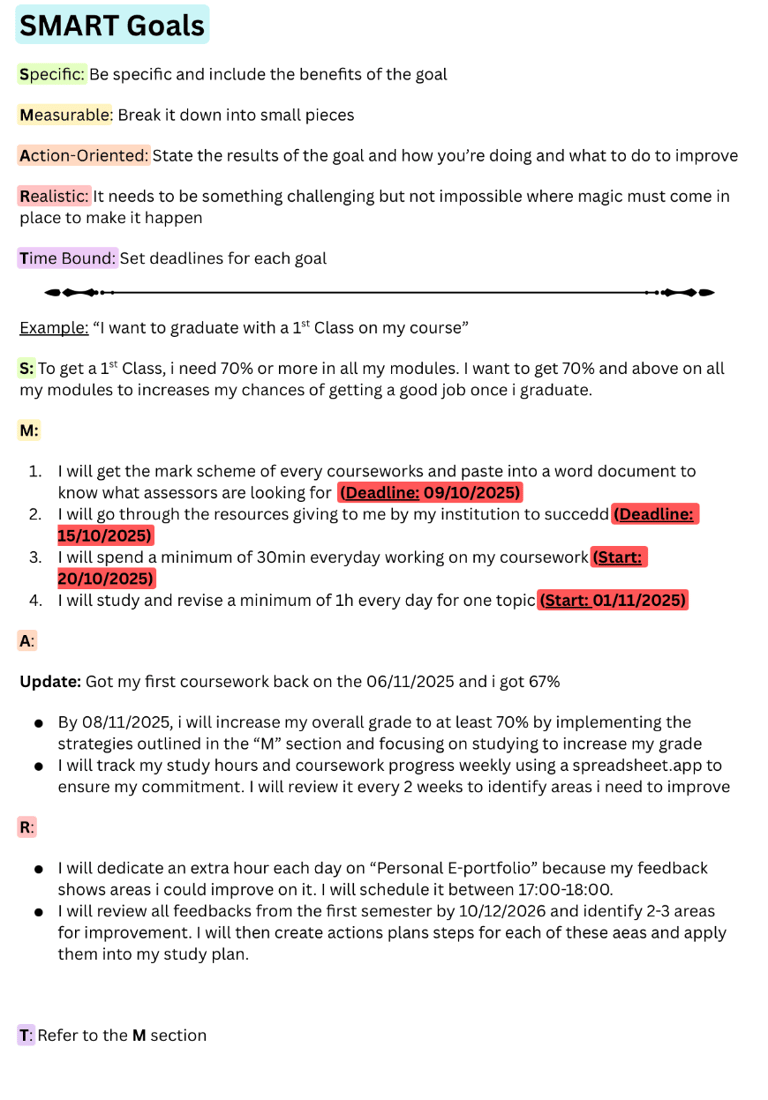
Don’t wake up one morning and say that you are going to digest 5 lectures or topics in one day to get better grades. That is unrealistic and unhealthy. Your brain has already taken it as a burden. Instead, set realistic and attainable goals such as revising 1 lecture or topic per day. After you have a clear and realistic aim, break it down into chunks. So, rather than just "revising for 1 lecture". You will go to YouTube to watch videos on the topic, then you will re-watch the recording or read about the topic. Finally, you will test your knowledge with quizzes. With that, it feels more manageable and will cause you to take action more easily. To do that, you can use the SMART goals as shown below:
Step 2 — Priority Management
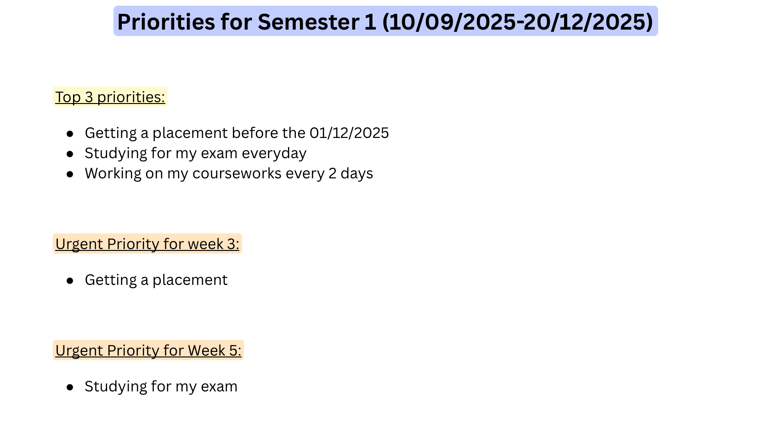
To avoid working hard and still not getting good results, your priority should be clear at the start of every semester. For every semester, have your top 3 priorities. Sometimes, you may want to focus on one of your priorities for a particular week. This is why I recommend setting priorities every week, because things can change. You will still have your overall priorities for the semester, but you will be more specific and strategic, if you also set your priorities for every week. I covered in the “Step-by-Step Guide: How to balance between exams and courseworks” that you can keep track of your priorities by writing them on an Academic Calendar or planner and spending more time on tighter deadlines. This prevents you from accumulating a lot of work and burnout when deadlines approach.
Step 3 — Create a daily Schedule
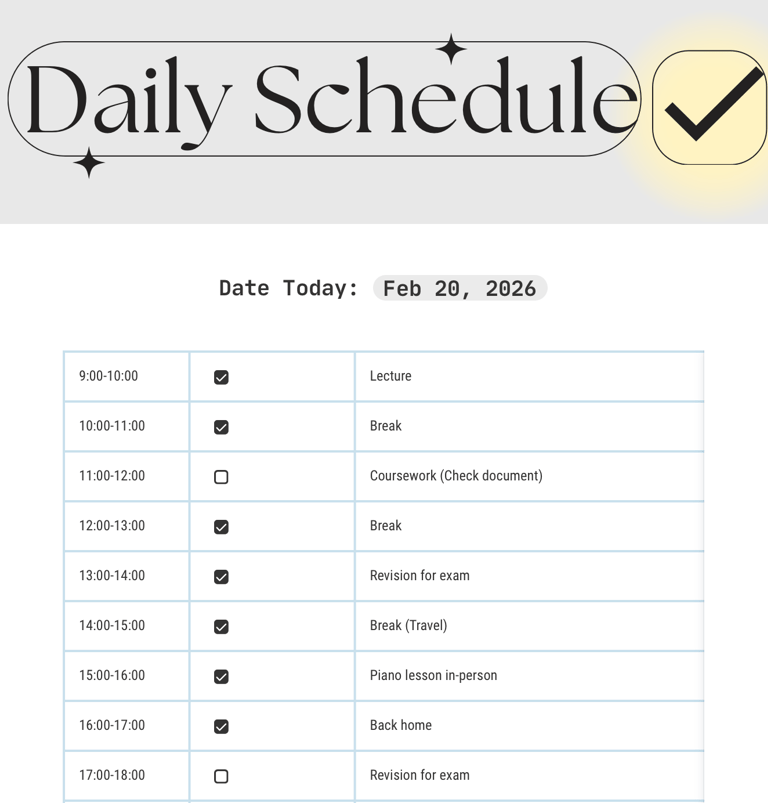
This is one of my biggest secrets of academic stability and balancing my social life. Always have a schedule for your day. Don’t start your day by waking up and deciding all of a sudden that you will so-and-so. Create a schedule that will give you time for many things, such as studying, working on coursework, hobbies and even breaks. It will make your day much more productive and give you that sense of achievement and purpose. You will be more organized, believe me. Now, how do you create a daily schedule ? Get your typing app or your notebook and write down everything that you want to do for the day. Classify them as either urgent or non-urgent. In case, you have a lot of things to do and want to prioritise and apply the "priority management principle". Then, write how long you want to spend for each task and adjust them in your time slot.
Extra Advice:
Never compare your grades or results with your friends or classmates. I know it’s tempting to do that. We want to see if our friend(s) has lower than us so that we can feel better about our grades. But don’t do that. Focus on your results and be grateful. If it's not that great, don’t feel bad and drench yourself in work. Calm down, breathe and read the improvements or the feedback. It’s bitter but, that’s what will take you higher next time.
Doing these things will definitely help you deal with academic pressure. But please, be consistent. You may not see that much of a change for three days, but you will notice the good benefits after a while. It will also help you in the long run and even when you finish your academics and get into society. So, be consistent and never give up !! You are valuable and should know that. Always be kind to yourself. It's okay if you miss a day of not creating a schedule, or maybe you missed a day of revision. Don’t be harsh on yourself but see it as a way to improve, adjust and do better next time.
Conclusion
How to deal with academic pressure ?
Set realistic goals
Priority Management
Create a daily schedule
Additional:
Don't compare yourself and your results with others
Seek support from your institution if needed
Engage in extracurricular activity
Meditate
Don't be harsh on yourself
Download free pdf or Microsoft Word Document